The Influence of Patient-Provider Language Concordance in Cancer Care: Results of the Hispanic Outcomes by Language Approach (HOLA) Randomized Trial
@Seible_2021_Influence_Patient-ProviderAbstract results
Each result the abstract reports — is it captured as evidence?
Compared with patients receiving care through professional interpretive services, patients cared for in direct Spanish reported significantly improved general satisfaction, technical quality of care (mean composite score [MCS], 4.41 vs 4.06; P = .005), care team interpersonal manner (MCS, 4.37 vs 3.88; P = .004), communication (MCS, 4.50 vs 4.25; P = .018), and time spent with patient,(MCS, 4.30 vs 3.92; P = .028).
suggested · 37% Beyond the primary endpoint, several secondary overall-care satisfaction domains measured immediately after the initial consultati
Specific to physician communication, patients rated direct-Spanish care more highly in perceived opportunity to disclose concerns (MCS 4.91 vs 4.62; P = .001), physician empathy (MCS, 4.94 vs 4.59; P <.001), confidence in physician abilities (MCS, 4.84 vs 4.51; P = .001), and general satisfaction with their physician (MCS, 4.88 vs 4.59; P <.001).
suggested · 39% On the physician-communication satisfaction survey (ISQ) administered immediately after the initial consultation, the direct-Spani
Analyzing the content of consultation encounters revealed differences between study arms, with the direct-Spanish arm having more physician speech related to patient history verification (mean number of utterances, 13 vs 9; P = .01) and partnering activities (mean utterances, 16 vs 5; P <.001).
suggested · 31% Coded transcripts of the initial consultation showed that, relative to interpreter-based encounters, direct-Spanish encounters had
Additionally, patients in the direct-Spanish arm were more likely to initiate unprompted speech (mean utterances, 11 vs 3; P <.001) and asked their providers more questions (mean utterances, 11 vs 4; P = .007).
suggested · 26% Coded consultation transcripts showed patients in the direct-Spanish arm were more verbally engaged than those in the interpreter-
This study shows improved patient-reported satisfaction among patients with cancer who had LEP and were cared for in direct Spanish compared with interpreter-based communication.
Further research into interventions to mitigate the patient-provider language barrier is necessary to optimize care for this population.
Tables & figures
Map each object to the evidence it grounds (one object can ground several), add anything missed, or flag a gap.
Figure 1
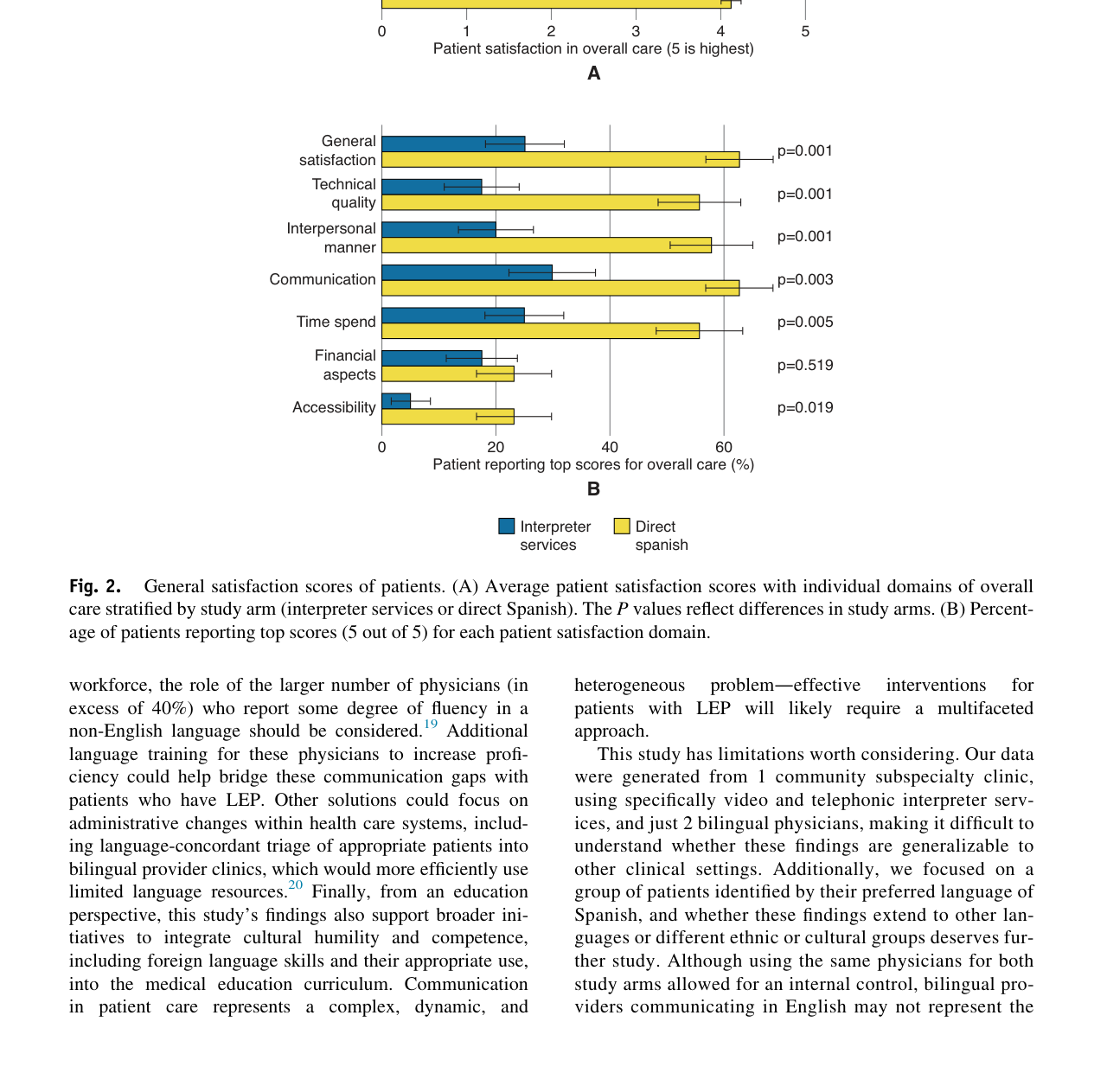
Figure 2
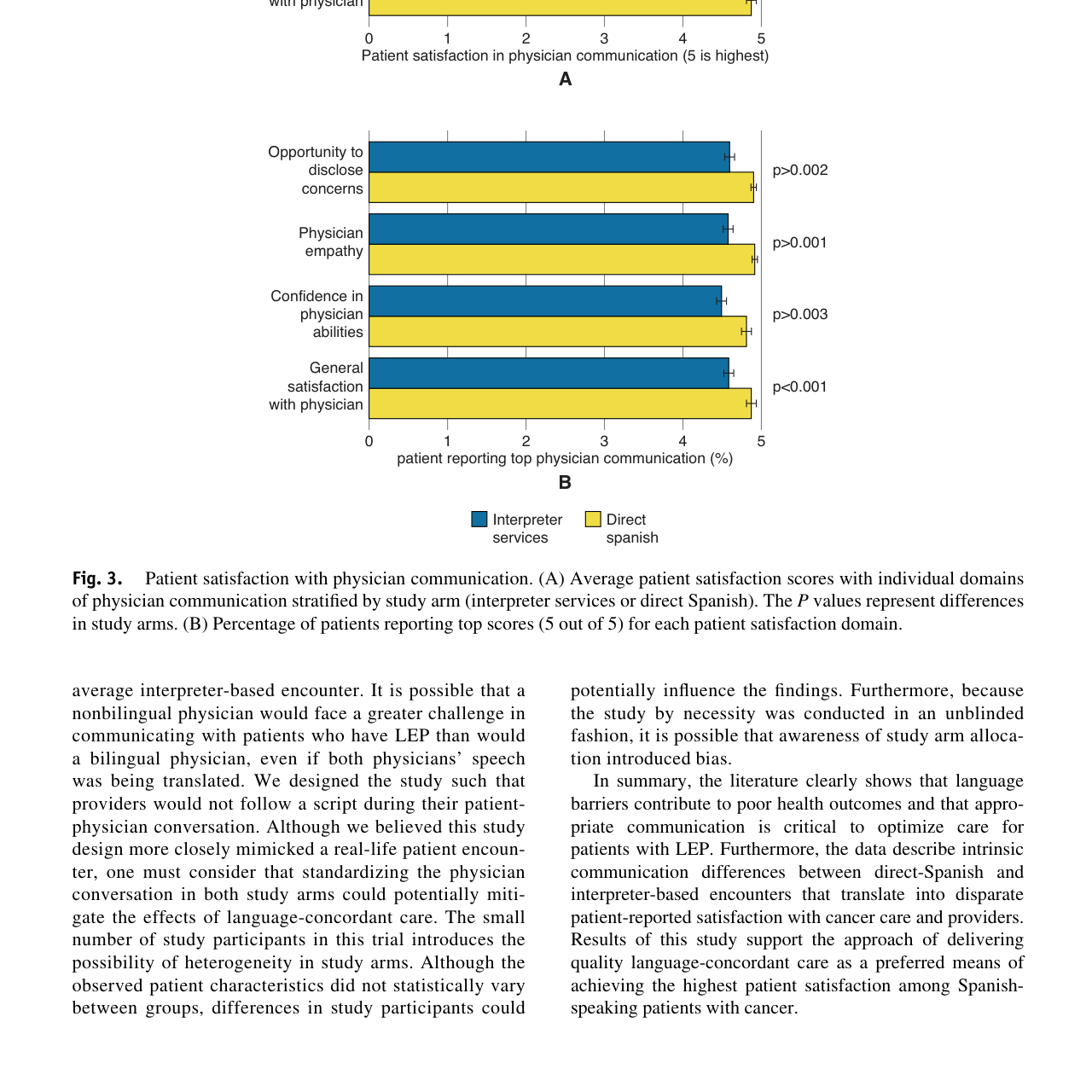
Figure 3
Table 1
Table 2
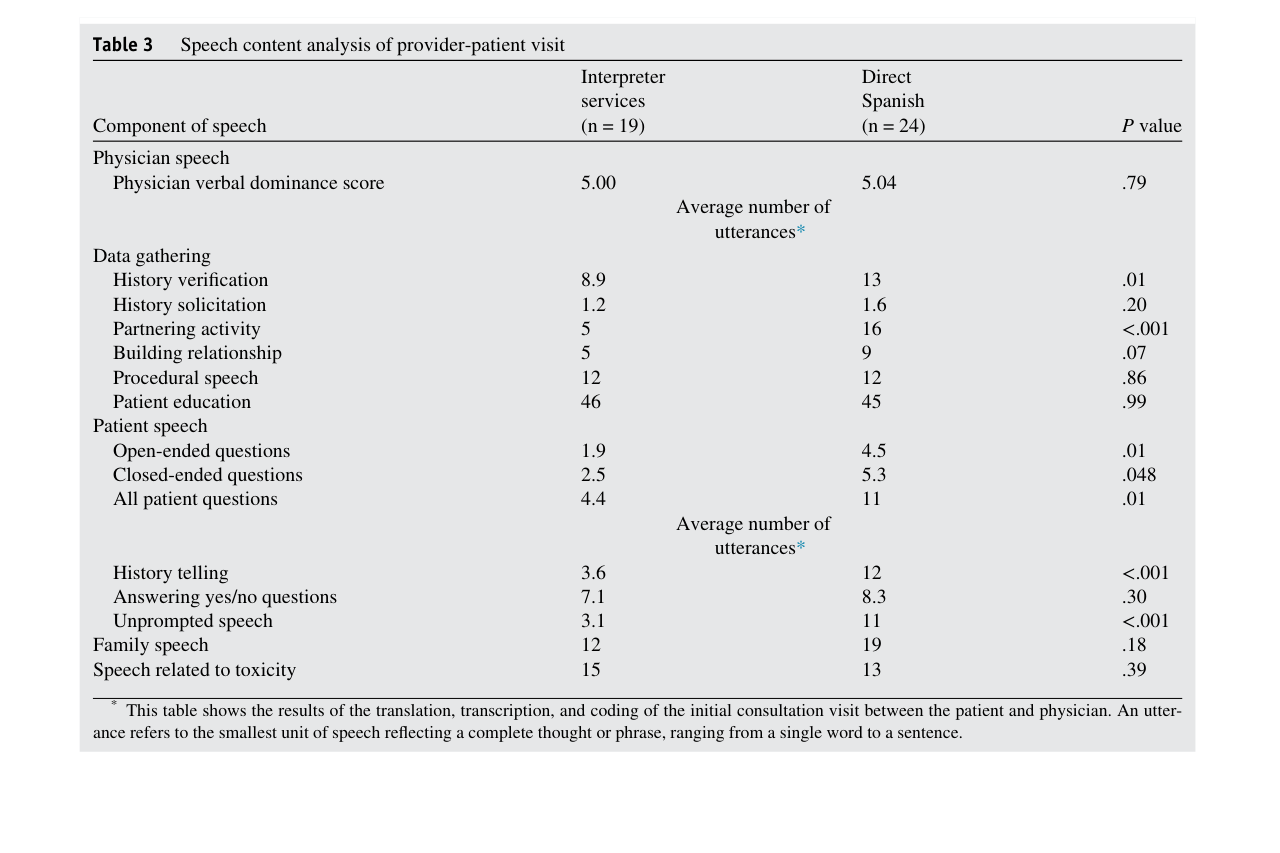
Table 3