Pediatric Hearing Aid Daily Wear Time Is Significantly Impacted by Clinician-Family Language Discordance
@Nicole_2024_Pediatric_HearingAbstract results
Each result the abstract reports — is it captured as evidence?
Children from families with limited English proficiency exhibited significantly shorter daily wear time (M = 1.3 hr) than their peers whose families were English-proficient speakers, thus, having a shared language with their audiologists (M = 5.2 hr).
suggested · 20% In a retrospective chart review of young children fit with hearing aids, daily hearing aid wear time (data-logged in hours) was mu
Results of this study suggest that family-clinician language discordance might put children at greater risk of shorter hearing aid wear time than children whose caregivers share a common language with their child's audiologist.
There can be many linguistic, cultural, and educational factors that contribute to hearing aid wear time in children whose families have limited English proficiency as well as different approaches to improving that wear time.
Efforts should ensure that hearing and hearing aid-related information is accessible to all families, especially those with clinician-family language discordance.
Such efforts can include, among others, training that improves clinicians' cultural and linguistic responsiveness to the diverse families they serve.
Tables & figures
Map each object to the evidence it grounds (one object can ground several), add anything missed, or flag a gap.
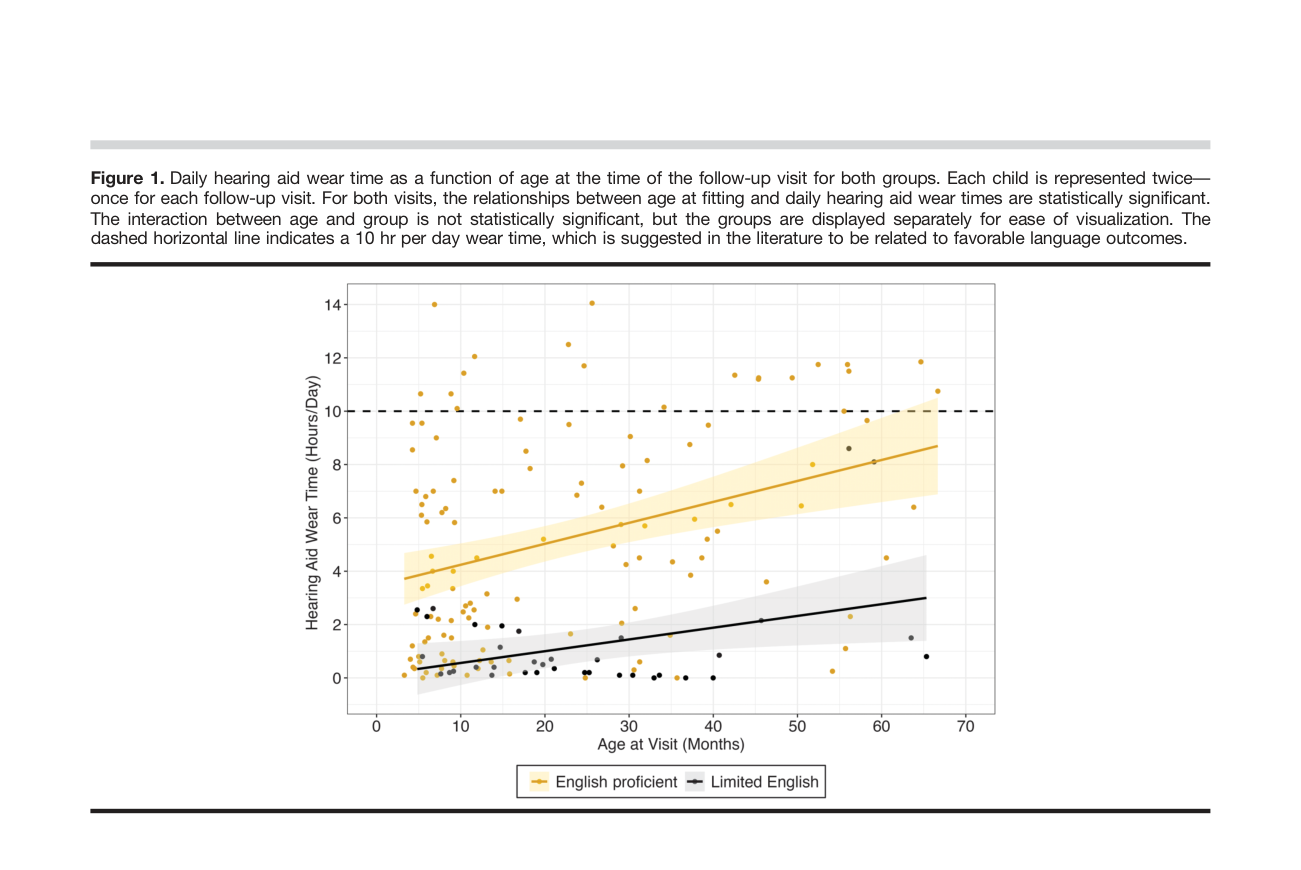
Figure 1 — Daily hearing aid wear time as a function of age at the time of the follow-up visit for both groups. Each child is represented twice—
Table 1 — Demographics for patients in the native English–proficient or limited-English-proficiency groups.