Improving Equity of Care for Patients with Limited English Proficiency Using Quality Improvement Methodology
@Martinez_2021_Improving_EquityAbstract results
Each result the abstract reports — is it captured as evidence?
The mean of LEP-SS patients with AIUD improved from 35.7% to 64.5% without significant changes in balancing measures.
During the postintervention period (6/1/2018-10/31/2020), no special cause variation was noted from the baseline 48-hour emergency department RV rates for LEP patients (3.1%) or English proficient patients (2.6%).
suggested · 20% Despite the significant improvement in appropriate interpreter use and documentation, the 48-hour ED return-visit (RV) rate for LE
While the RV rate was not affected, this project is part of a multi-faceted approach aiming to positively impact this outcome measure.
Significant improvements in AIUD were achieved without affecting balancing measures.
Tables & figures
Map each object to the evidence it grounds (one object can ground several), add anything missed, or flag a gap.
Figure 1 — Key driver diagram showing the project aim, and the primary and secondary drivers that contribute toward achieving the aim.
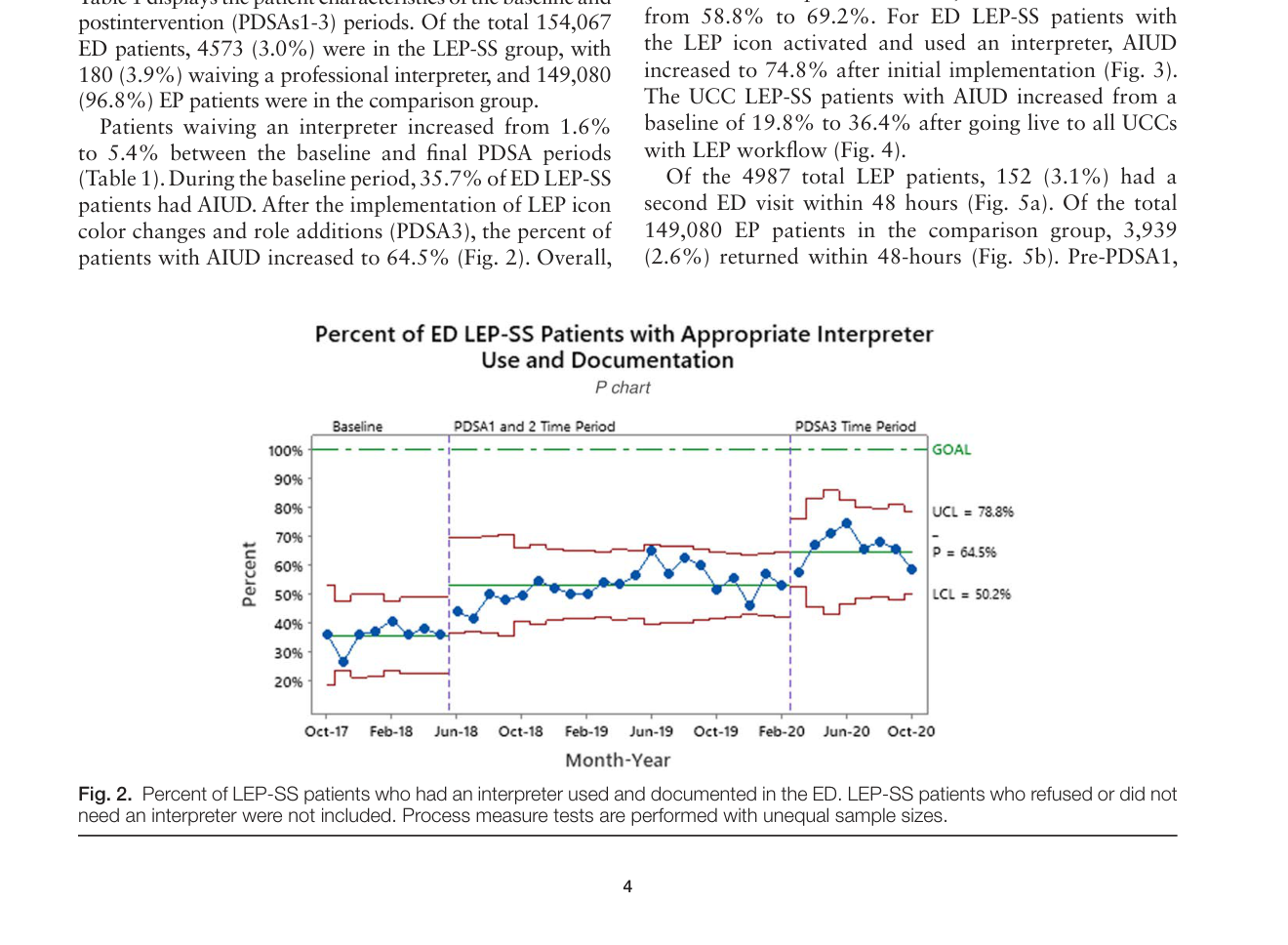
Figure 2 — Percent of LEP-SS patients who had an interpreter used and documented in the ED. LEP-SS patients who refused or did not
Figure 3 — ED LEP-SS patients who had the LEP icon activated for identification and awareness along with AIUD. The red squares at
Figure 4 — Percent of LEP-SS patients who had an interpreter used and documented in the UCC location with the most baseline LEP
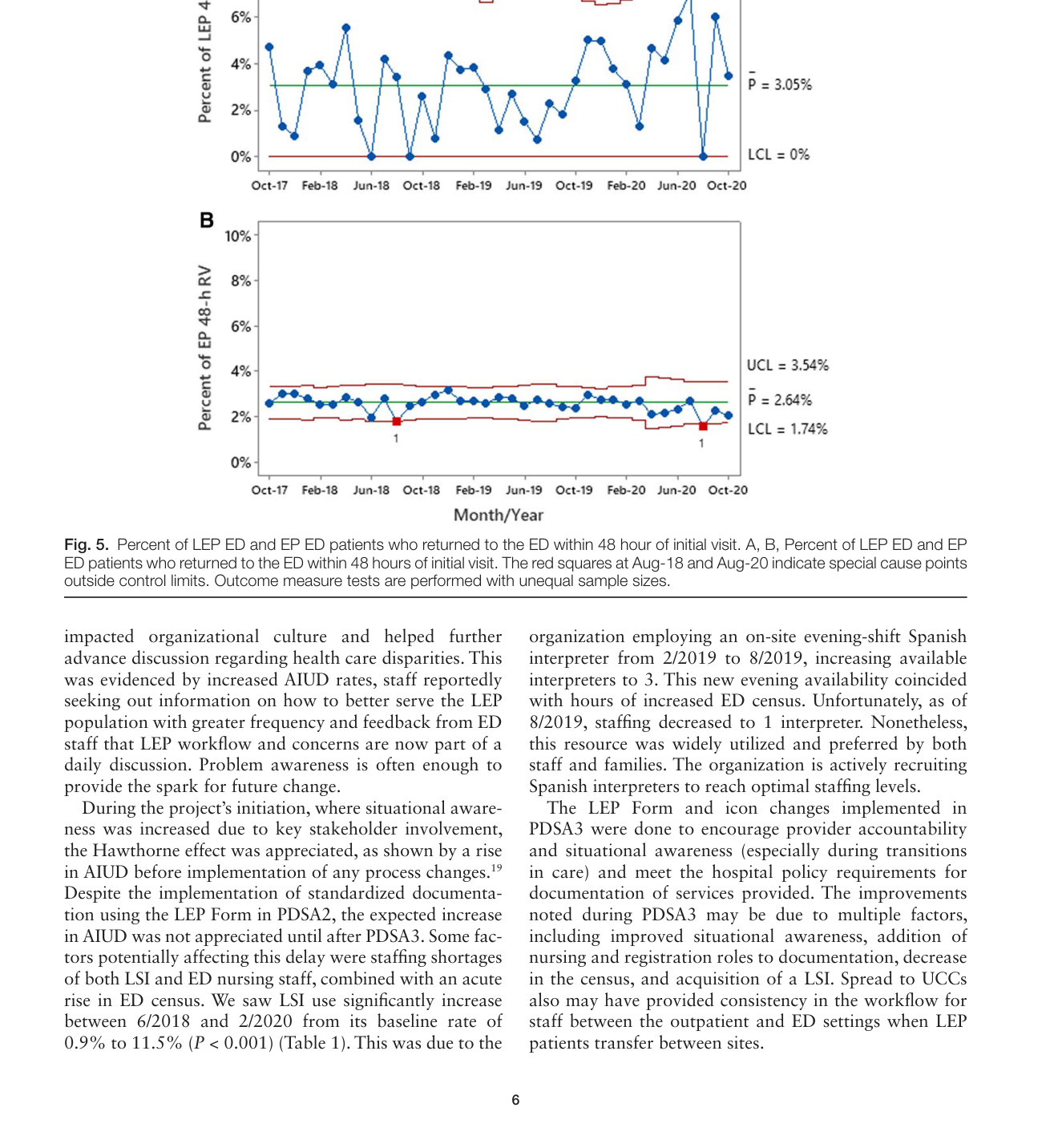
Figure 5 — Percent of LEP ED and EP ED patients who returned to the ED within 48 hour of initial visit. A, B, Percent of LEP ED and EP
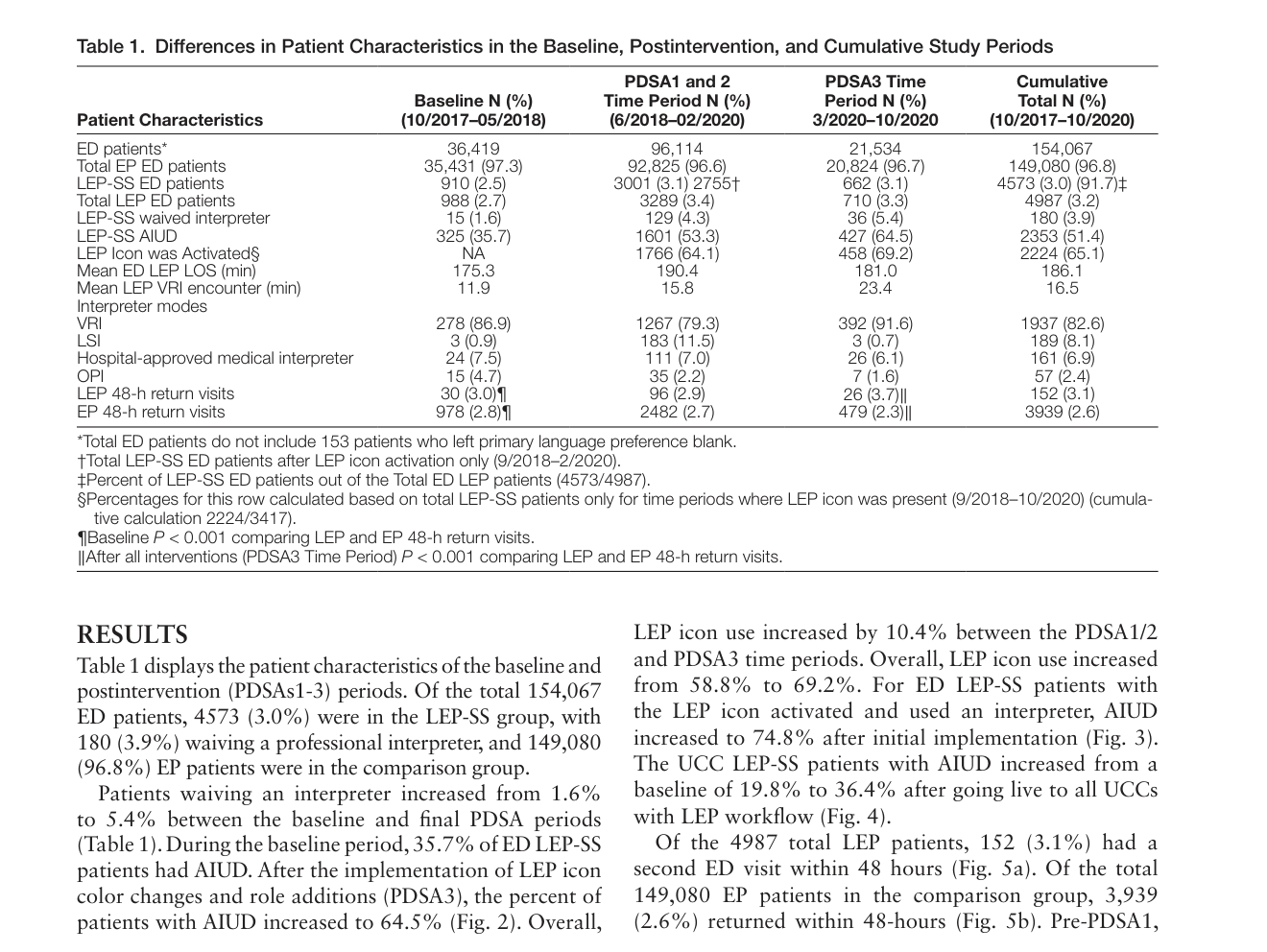
Table 1 — Differences in Patient Characteristics in the Baseline, Postintervention, and Cumulative Study Periods