Evaluation of Patient Access to Spanish-Language-Concordant Care on a Postpartum Unit
@Jennifer_2023_Evaluation_PatientAbstract results
Each result the abstract reports — is it captured as evidence?
Access to a clinician certified in medical Spanish or an interpreter was offered to 12 of 50 (24%) couplets upon admission to the unit and to 7 of 50 (14%) of couplets for daily maternal and newborn medical rounds.
suggested · 28% In a chart review of 50 Spanish-preferring postpartum birthing parent–newborn couplets, access to a clinician certified in medical
Clinicians reported long and unpredictable wait times to access interpreters, which led them to rely on hand gestures, broken Spanish, and smartphone apps to "get by" when communicating with patients without certified interpretation services.
suggested · 30% In semistructured interviews, postpartum clinicians described long and unpredictable interpreter wait times — driven by interprete
Participants described low usage of interpreters for "noncritical" encounters.
Interpreters and other forms of Spanish-language-concordant care were underused on the postpartum unit.
This deviation from national standards may put families at risk for harm.
Recommendations from this study include advancing a culture of respectful care, improving the interpreter request workflow, addressing safe staffing, facilitating direct patient access to interpreters, and providing ongoing evaluation and support.
Tables & figures
Map each object to the evidence it grounds (one object can ground several), add anything missed, or flag a gap.
Table 1
Table 2
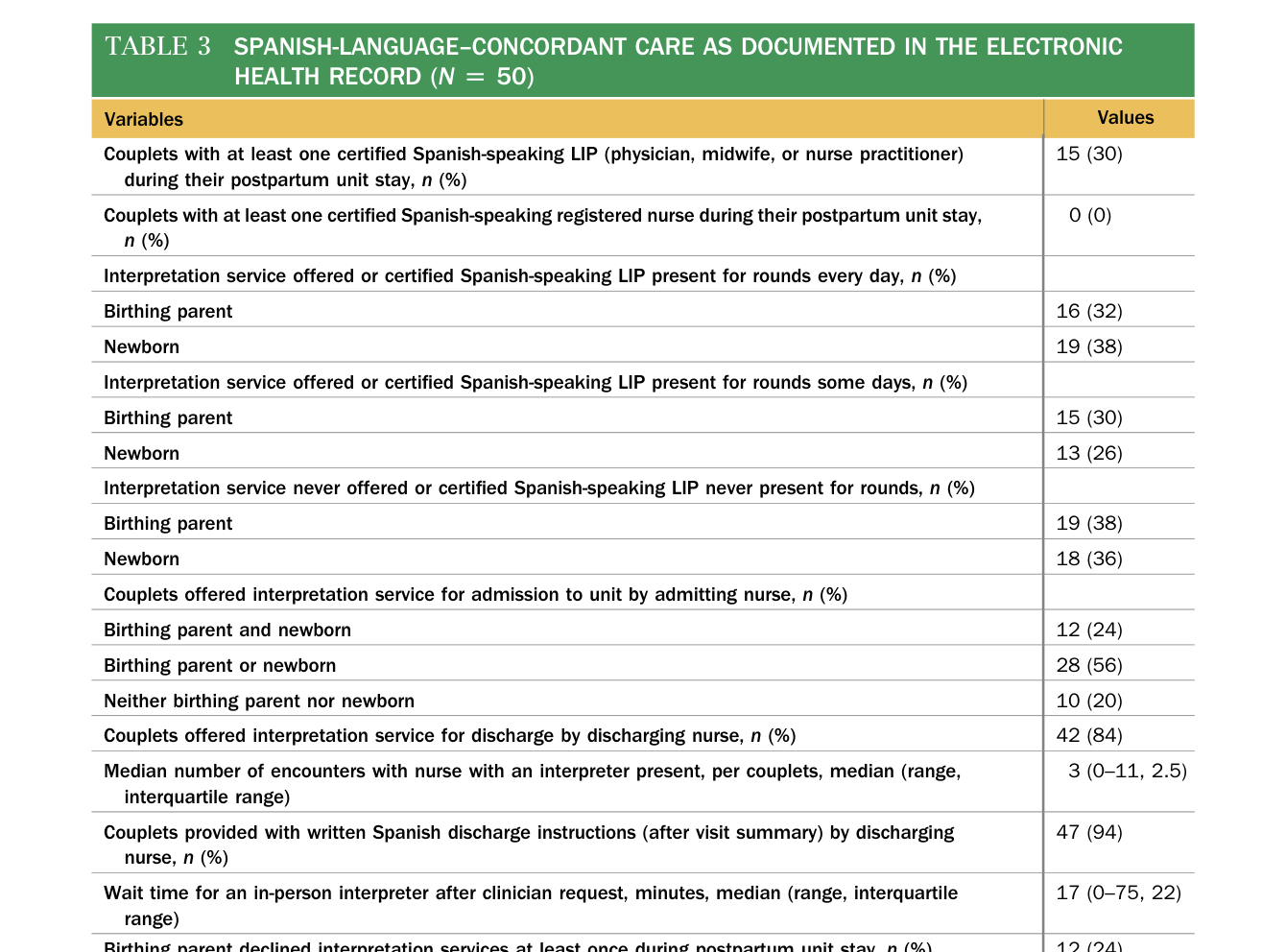
Table 3