A Reversed Trend: Care for Limited English Proficiency Patients in the Pediatric Emergency Department
@Greenky_2019_Reversed_TrendAbstract results
Each result the abstract reports — is it captured as evidence?
The population included 152,945 patients from 232,787 ED encounters in 2016.
Interpreters were requested for 12.1% of encounters.
For ED LOS, a model-adjusted difference of 0.77% was found between interpreter groups.
For change in triage status, adjusted odds were 7% higher in the interpreter requested cohort.
suggested · 19% For ED readmission within 7 days, the adjusted odds were only 3.0% higher in the interpreter-requested cohort than in the no-inter
For ED readmission within 7 days, adjusted odds were 3% higher in the interpreter requested cohort.
suggested · 32% For ED readmission within 7 days, the adjusted odds were only 3.0% higher in the interpreter-requested cohort than in the no-inter
These effect sizes are small (ES < 0.2).
Our study showed low ES of the differences in ED metrics between LEP and English-speaking patients, suggesting little clinical difference between the two groups.
The impact of this improvement should be further studied.
Tables & figures
Map each object to the evidence it grounds (one object can ground several), add anything missed, or flag a gap.
Table 1 — Patient and encounter characteristics overall and by interpreter requested.
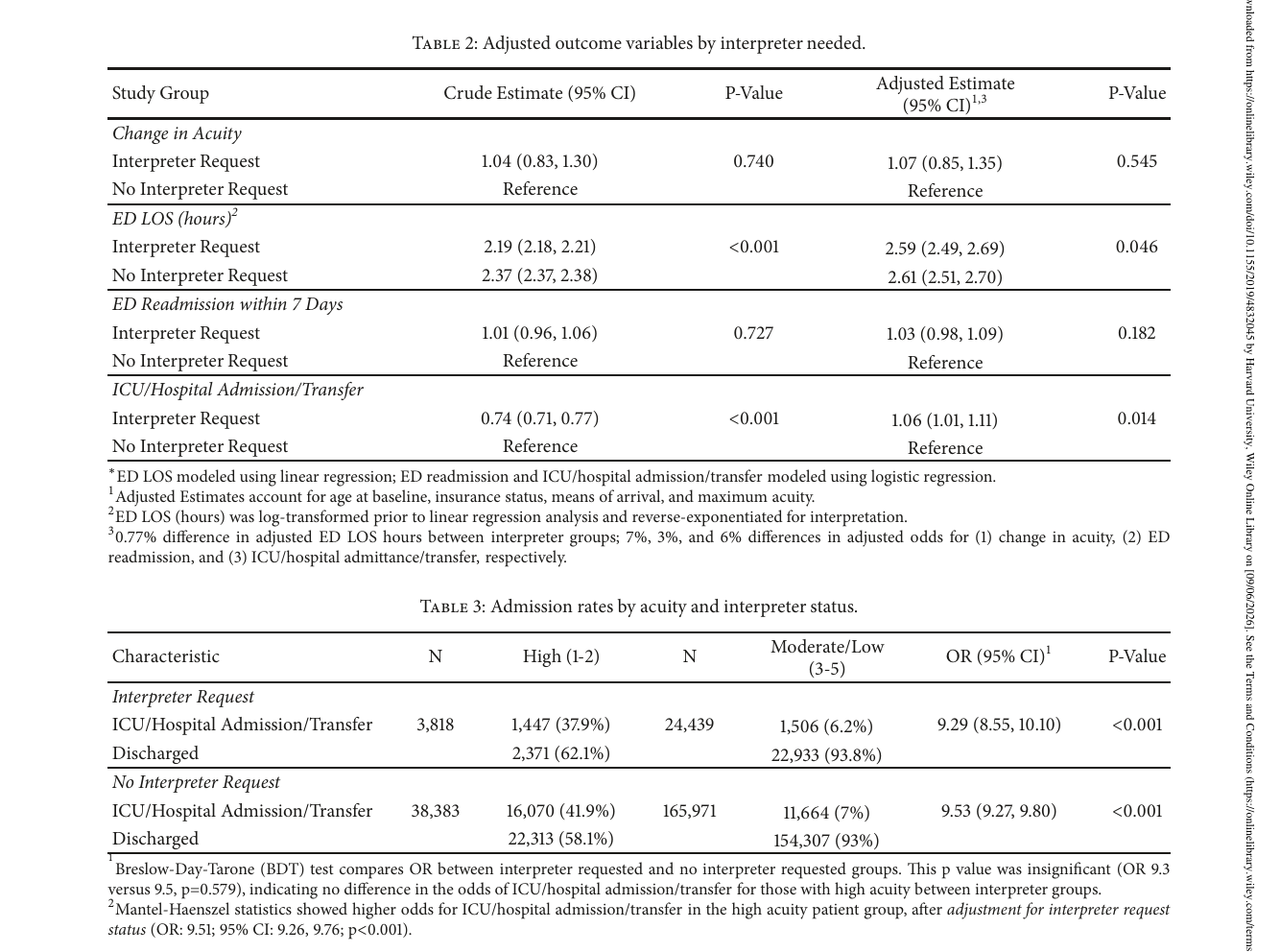
Table 2 — Adjusted outcome variables by interpreter needed.
Table 3 — Admission rates by acuity and interpreter status.
Table 4 — shows adjusted results for Spanish interpreter