Translating Discharge Instructions for Limited English-Proficient Families: Strategies and Barriers
@Davis_2019_Translating_DischargeAbstract results
Each result the abstract reports — is it captured as evidence?
Most survey respondents (81%) reported having a written translation policy at their hospital, and all reported translating a subset of hospital documents, for example, consent forms.
suggested · 23% In a survey of 31 children's hospital language-services contacts, all respondents reported translating a subset of hospital docume
Most but not all reported translating discharge instructions (74%).
When asked how inpatient staff typically provide translated discharge instructions, most reported use of pretranslated documents (87%) or staff interpreters (81%).
Reported barriers included difficulty translating uncommon languages, mismatched discharge and translation time frames, and inconsistent clinical staff use of translation services.
Strategies to address barriers included document libraries, pretranslated electronic health record templates, staff-edited machine translations, and sight translation.
Institutional policies differed regarding the appropriateness of allowing interpreters to assist with translation.
Respondents agreed that machine translation should not be used alone.
Children's hospitals experience similar operational and organizational barriers in providing language-concordant discharge instructions.
Current strategies focus on translating standardized documents; collaboration and innovation may encourage provision of personalized documents.
Tables & figures
Map each object to the evidence it grounds (one object can ground several), add anything missed, or flag a gap.
Figure 1
Table 1
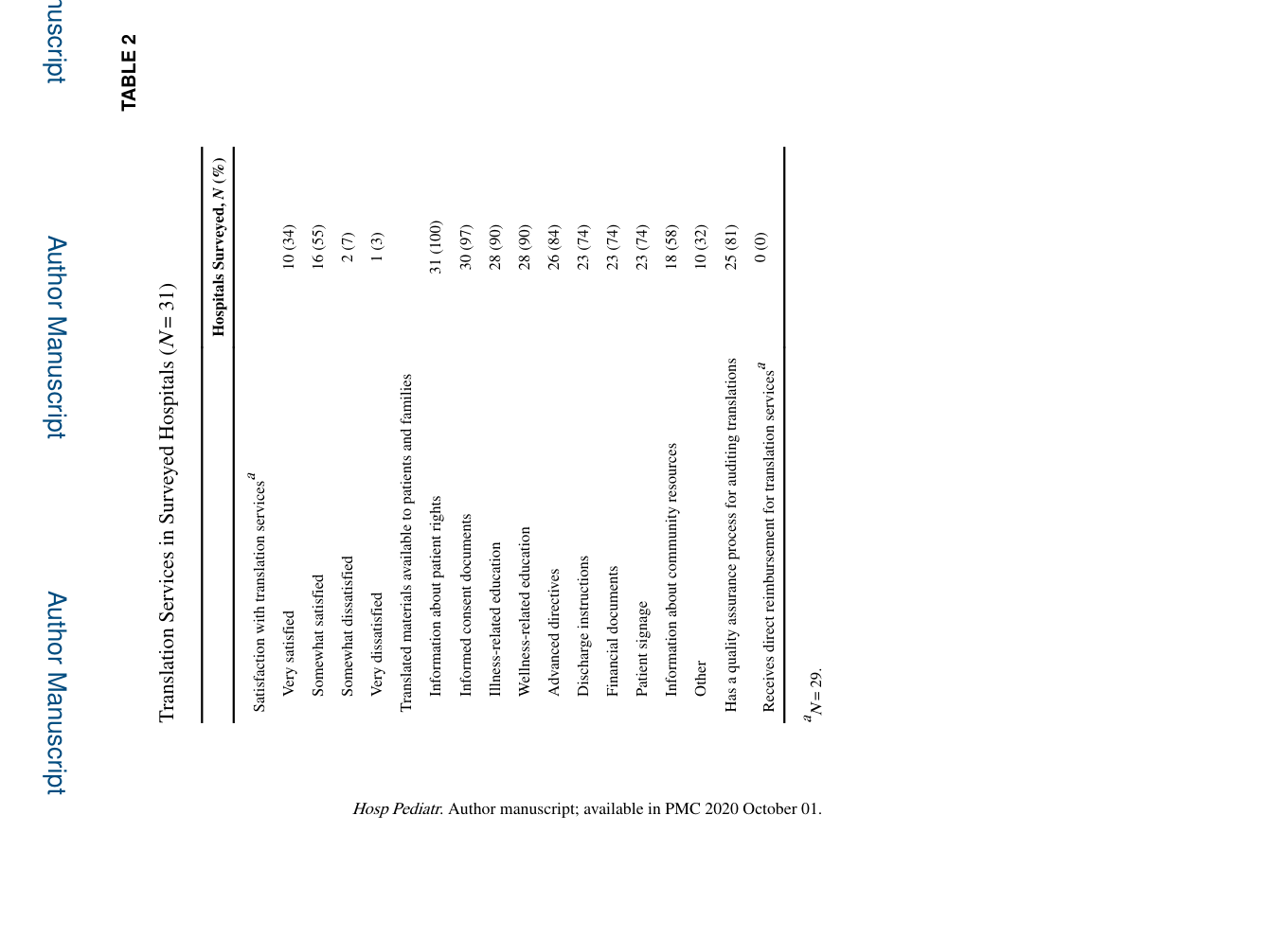
Table 2
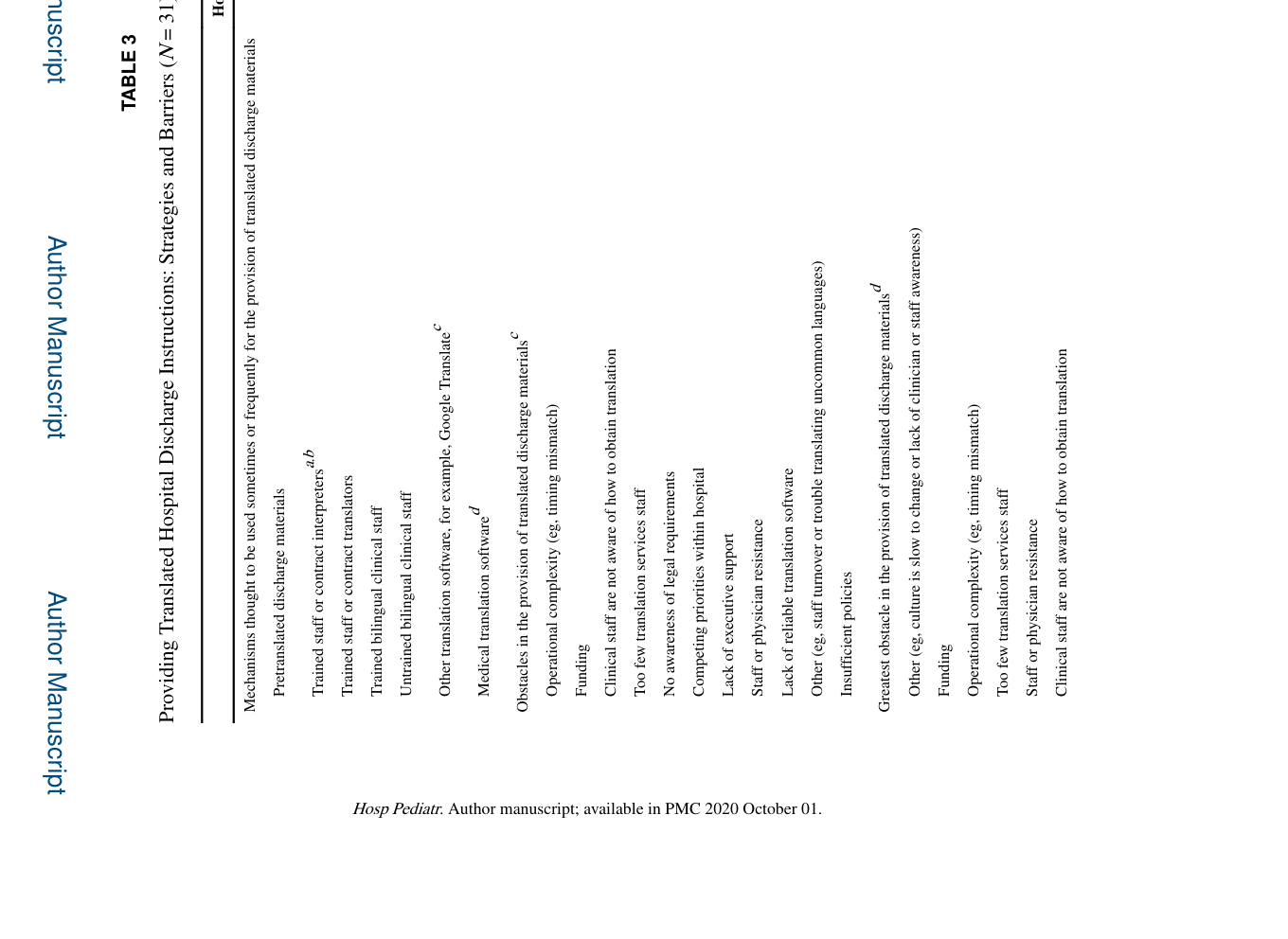
Table 3
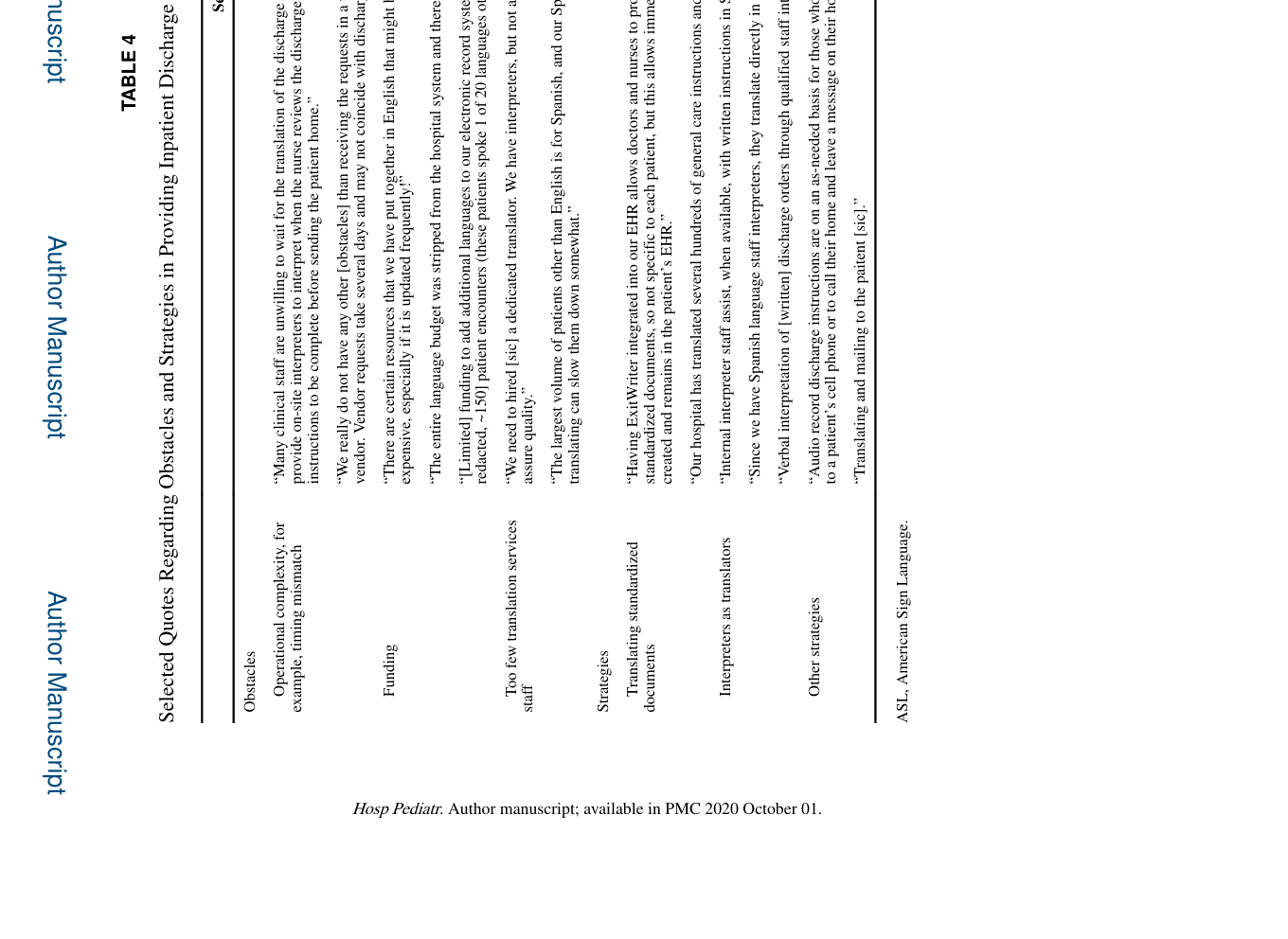
Table 4