Nearly two-thirds of aged-care staff would use translation apps again (15 of 24, 65.2%)
Source
Hwang (2022). Testing the use of translation apps to overcome everyday healthcare communication in Australian aged-care hospital wards-An exploratory study. Nursing Open.
Description #
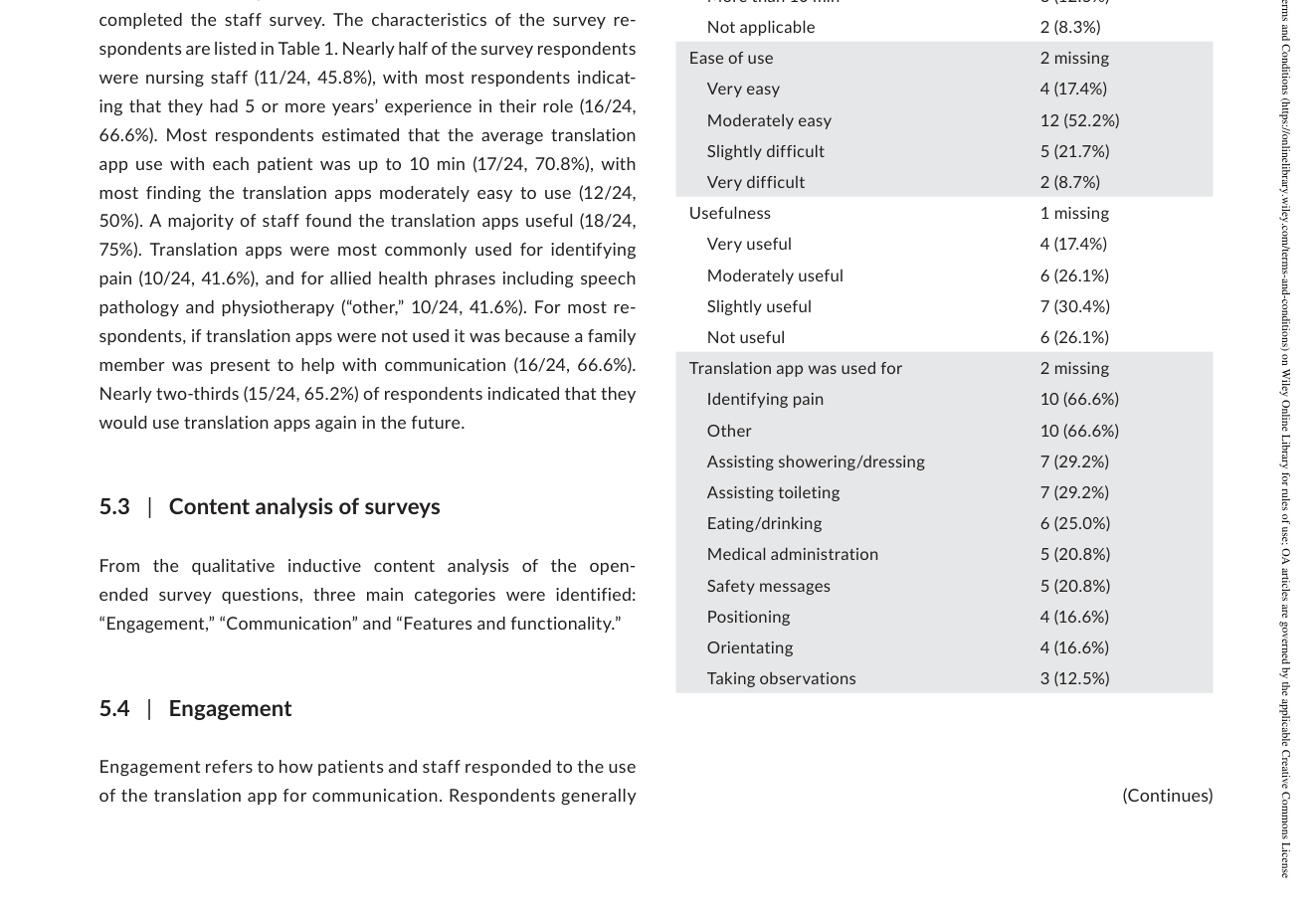 On the end-of-trial staff survey, nearly two-thirds of respondents (15/24, 65.2%) indicated they would use translation apps again in the future to overcome language barriers, with 8/24 (34.8%) saying they would not (Table 1). This future-use intention is a marker of the apps' acceptability to ward staff.
"Nearly two-thirds (15/24, 65.2%) of respondents indicated that they would use translation apps again in the future." (Hwang, 2022, p. 581)
Methods Context #
What? #ⓘ
The observable: staff-reported intention to use translation apps again in future care, recorded as a yes/no survey item.
"and whether they would use translation apps in the future." (Hwang, 2022, p. 580)
How? #ⓘ
A self-report staff survey administered at the conclusion of the two-month trial, summarized with descriptive statistics.
"staff were invited to complete a staff survey measuring their experience of using the translation app, estimated frequency of use, most frequently used phrases, enablers, and barriers to using translation apps, and whether they would use translation apps in the future." (Hwang, 2022, p. 580)
Who? #ⓘ
The 24 nursing and allied health staff across four aged-care hospital wards at three Melbourne hospital sites who completed the survey (1 missing on this item).
"Twenty-four nursing and allied health staff across the four wards completed the staff survey." (Hwang, 2022, p. 581)
Other Notes #
Future-use intention reflects staff acceptability, not measured effectiveness or patient acceptability.